01 / ACTIVE FLAGSHIP QUEST
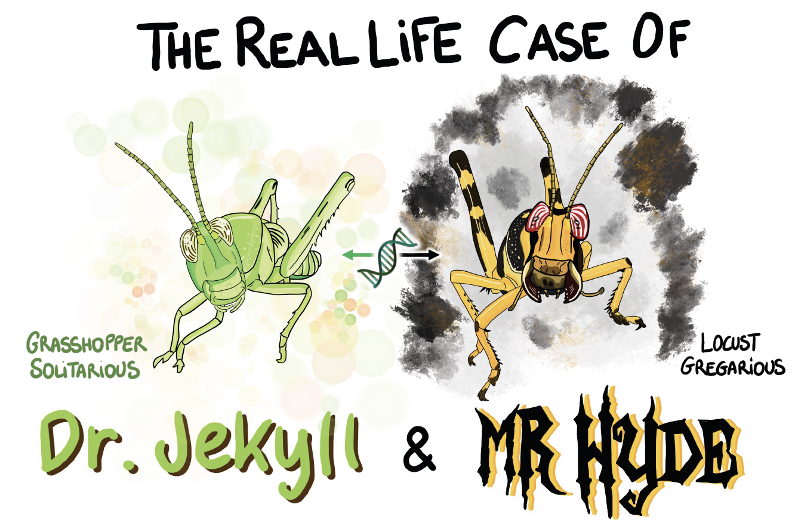
Density-dependent behavioral plasticity and locust swarming
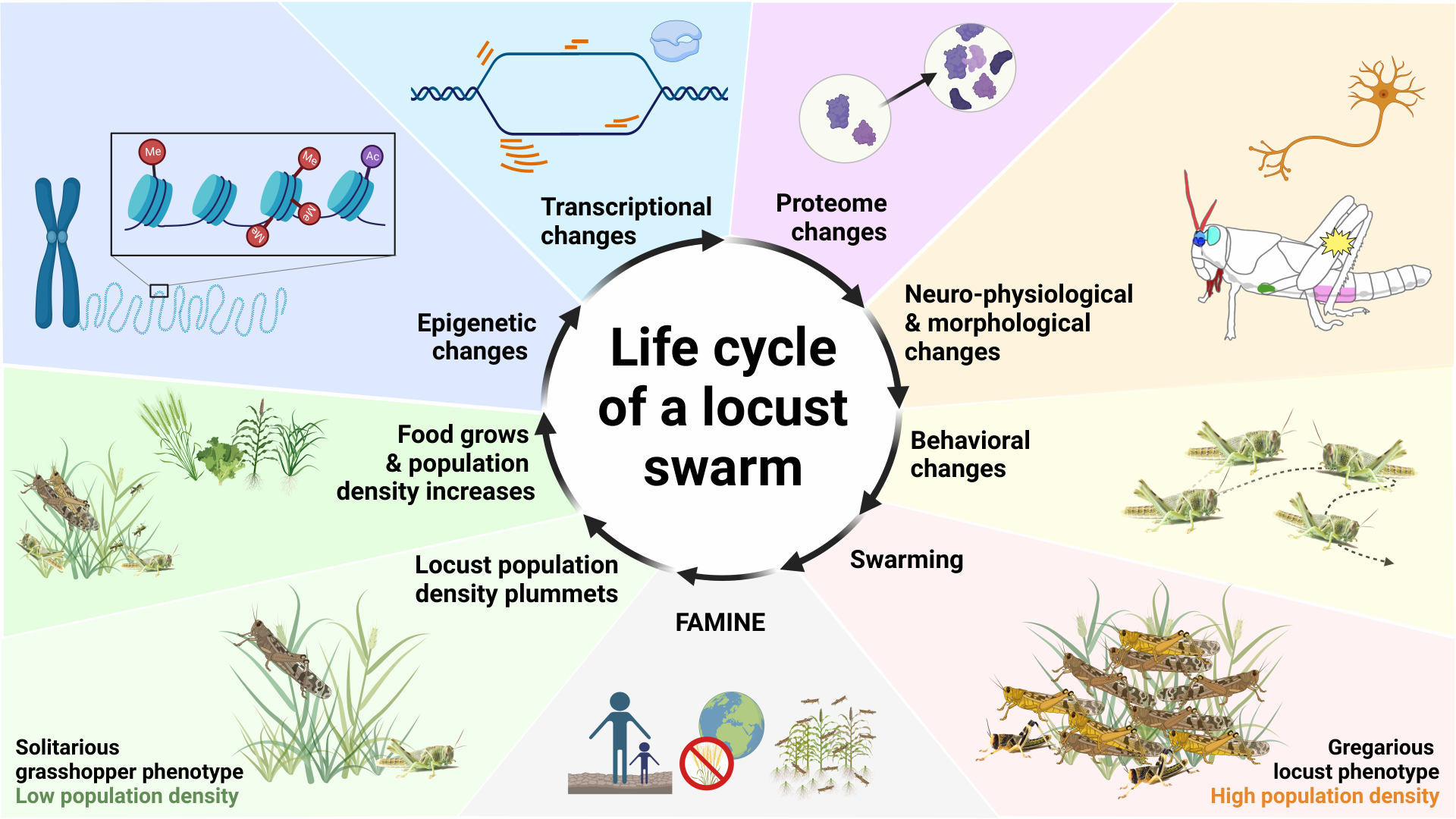
What are the earliest gene-regulatory events that initiate the locust phase transition?
Do Schistocerca locusts share an ancestral molecular “master switch,” or has evolution followed different routes to swarming?
My research uses controlled density manipulation across multiple Schistocerca species with different degrees of locust phase plasticity. In particular, I follow phase transitions within individuals from their earliest molecular signals (a few hours) to visible changes in behavior, morphology, and physiology (a few days). Working collaboratively, we established standardized multi-species rearing, behavioral assays, and experimental transfers between isolated and crowded conditions to induce gregarization and solitarization in the TAMU locust quarantine. I led the time-sensitive dissections and bulk tissue processing in the wet lab for RNA sequencing. Together, our BPRI team generated approximately 500 time-resolved transcriptomes per species and integrated these data with six chromosome-scale genomes, comparative genomics, behavioral measurements, and functional RNAi experiments.
This comparative phylogenetic framework tests whether repeated swarming evolved through a conserved regulatory core or through partly distinct molecular solutions in each lineage. Our comparative results support multiple routes to swarming despite highly conserved genomes and reveal substantial variation in gene expression responses among species, tissues, and even individuals.