Resolve the genomic histories of host-switching lineages.
Research overview
Quest 02 / Colony and country scale
Novel adaptations and global invasion genomics
How do organisms respond after host shifts, bottlenecks, and biological invasions?
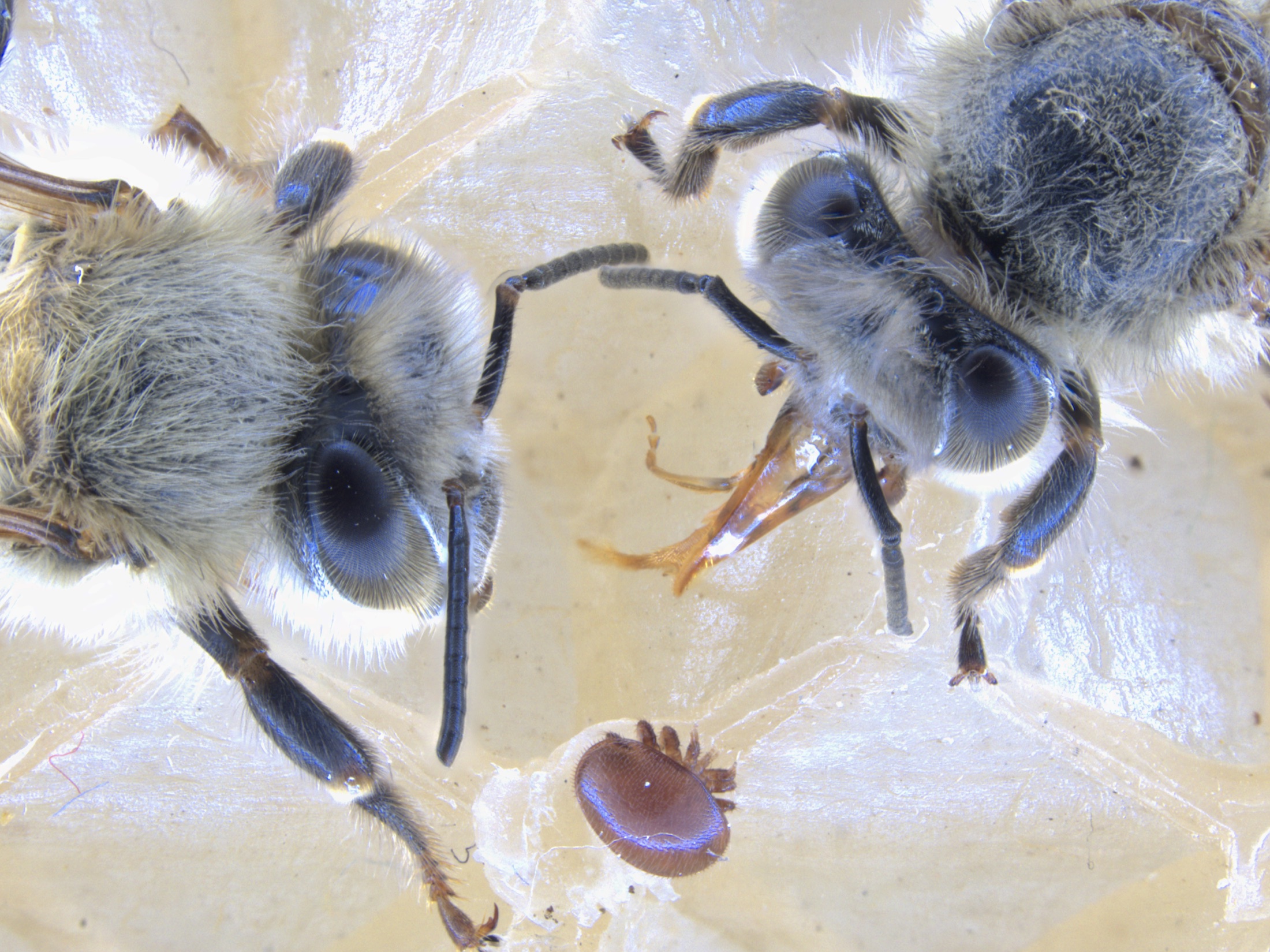
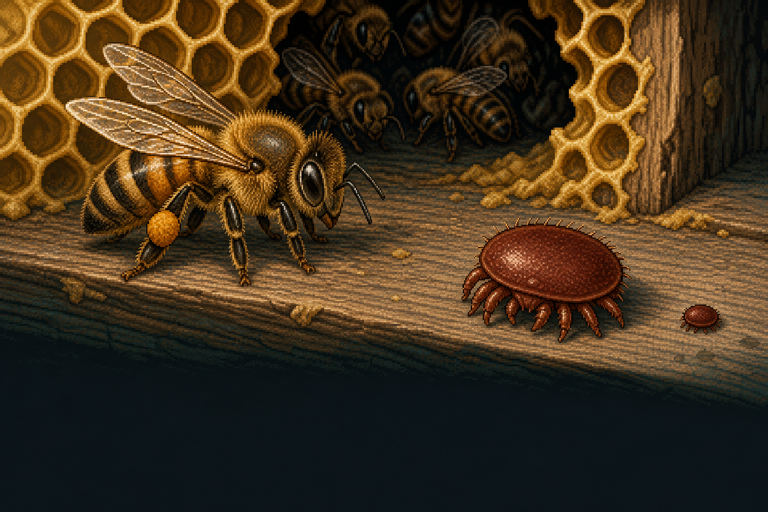
Varroa mites provide a system for studying genetic variation, demography, and human-mediated movement during a global host shift.
INTERFACE / AVAILABLEEVIDENCE / ONGOING
RESEARCH BACKGROUND
Why this system?
Biological invasions bring demographic change, repeated introductions, and global transport into an observable historical interval. Varroa mites make it possible to compare native and introduced populations while keeping published evidence separate from an atlas still in preparation.
QUEST DOSSIER / TRACEABLE EVIDENCE
Contribution and methods
First author of the linked 2022 demographic-history study; contribution wording for the atlas is [NEEDS MAÉVA REVIEW].
- Population genomics
- Demographic inference
- Ancestry reconstruction
- Comparative genomics
QUESTIONS / SYSTEMS / APPROACH
From biological observation to evolutionary mechanism.
Guiding questions
- 01
Which genomic patterns accompany establishment on a new host?
- 02
How do bottlenecks and repeated introductions alter population structure?
- 03
Do independent host shifts show shared or distinct genomic histories?
Biological systems
- Varroa mites across native and novel honey bee hosts
- Native-range and globally invasive populations
- Repeated host shifts and human-mediated dispersal
Approaches
- Global population and invasion genomics
- Demographic inference and ancestry reconstruction
- Comparative genomics of independent host shifts
- Integration of genomic, ecological, and historical records
NEXT QUESTIONS
Research directions
Test the relative contributions of standing variation and population contact.
Connect invasion history to present-day population structure.
COLLABORATION SIGNAL
Interested in this question?
I welcome collaborations connecting field biology, comparative genomics, and reproducible analysis.
Start a conversation