Compare population histories across archipelagos.
Research overview
Quest 03 / Population scale
Species biogeography and evolution in island systems
How do isolation, movement, and environment shape diversity across island populations?
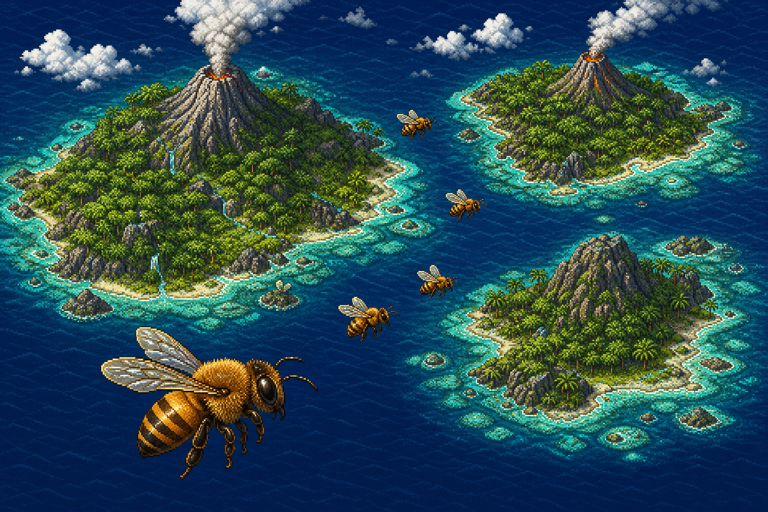
Island honey bees reveal how colonization history, admixture, local environments, and human-mediated movement structure biodiversity across archipelagos.
INTERFACE / AVAILABLEEVIDENCE / PUBLISHED
RESEARCH BACKGROUND
Why this system?
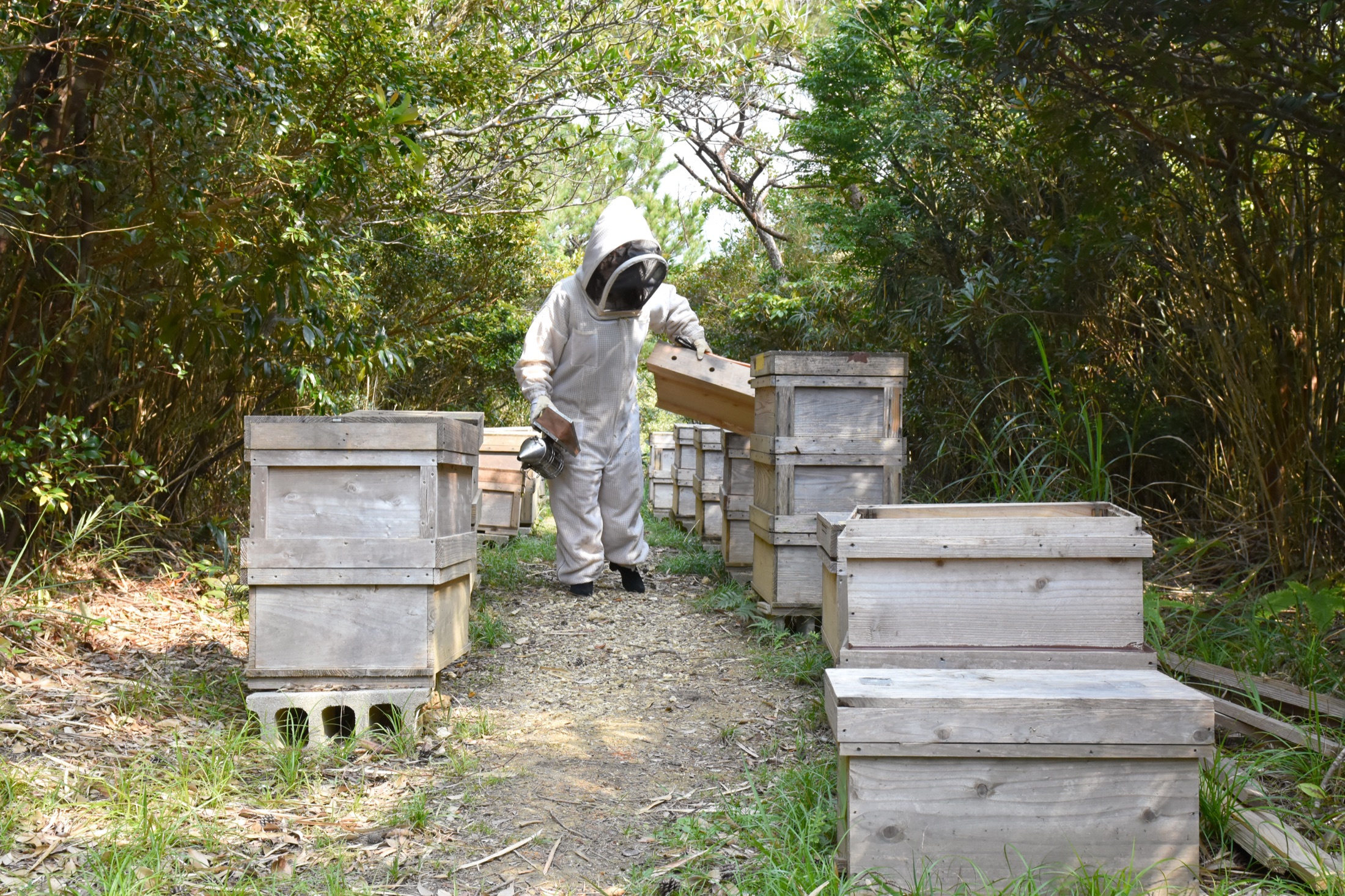
Islands are natural systems for examining movement, isolation, admixture, and environmental differences. Their geographic boundaries help connect colonization history to present-day genomic variation without assuming that every difference is adaptive.
QUEST DOSSIER / TRACEABLE EVIDENCE
Contribution and methods
First-author and collaborative population-genetic studies across Southwest Indian Ocean island honey bees.
- Population genetics
- Mitochondrial and microsatellite analysis
- Population genomics
- Biogeographic comparison
QUESTIONS / SYSTEMS / APPROACH
From biological observation to evolutionary mechanism.
Guiding questions
- 01
How do colonization history and connectivity structure diversity across islands?
- 02
When does human-mediated movement reinforce or reduce geographic differentiation?
- 03
Which genomic patterns remain after demographic history is considered?
Biological systems
- Honey bee populations across island systems
- Managed and feral populations connected by movement
- Archipelagos with contrasting ecological and colonization histories
Approaches
- Population and landscape genomics
- Biogeographic and demographic reconstruction
- Comparative sampling across islands
- Tests of gene flow and admixture
NEXT QUESTIONS
Research directions
Connect genomic diversity to conservation questions.
Separate natural dispersal from managed movement through time.
COLLABORATION SIGNAL
Interested in this question?
I welcome collaborations connecting field biology, comparative genomics, and reproducible analysis.
Start a conversation